A Lifetime Deal Needs No Writing
The one-year prong of the Statute of Frauds is not a rule about how long a contract lasts. It asks whether full performance is possible within a year of formation. That is why an oral two-year contract needs a writing and an oral lifetime contract does not.
2026-08-16
Almost every student meets the Statute of Frauds and draws the same conclusion: oral contracts are risky, and the longer the deal, the more likely it needs to be in writing. That instinct produces exactly the wrong answer on the most commonly tested prong. The Statute of Frauds is not a general suspicion of spoken agreements. It is a short, closed list of categories, and outside that list an oral contract is as enforceable as a signed one. The categories are conventionally memorized as MY LEGS — Marriage, Year, Land, Executor, Goods of $500 or more under UCC § 2-201, and Suretyship — and the one that trips people up is the Year.
Restatement (Second) of Contracts § 130 states the test precisely: the Statute applies where a promise in the contract cannot be fully performed within one year from the time the contract is made. Note what that sentence does not say. It does not ask how long the parties expect performance to take, or how long it actually takes, or whether the deal is described as long-term. It asks a question about logical possibility measured at the moment of formation: is there any way, consistent with the contract's own terms, for performance to be complete inside twelve months? If yes, the one-year prong never applies, no matter how improbable that early completion is.
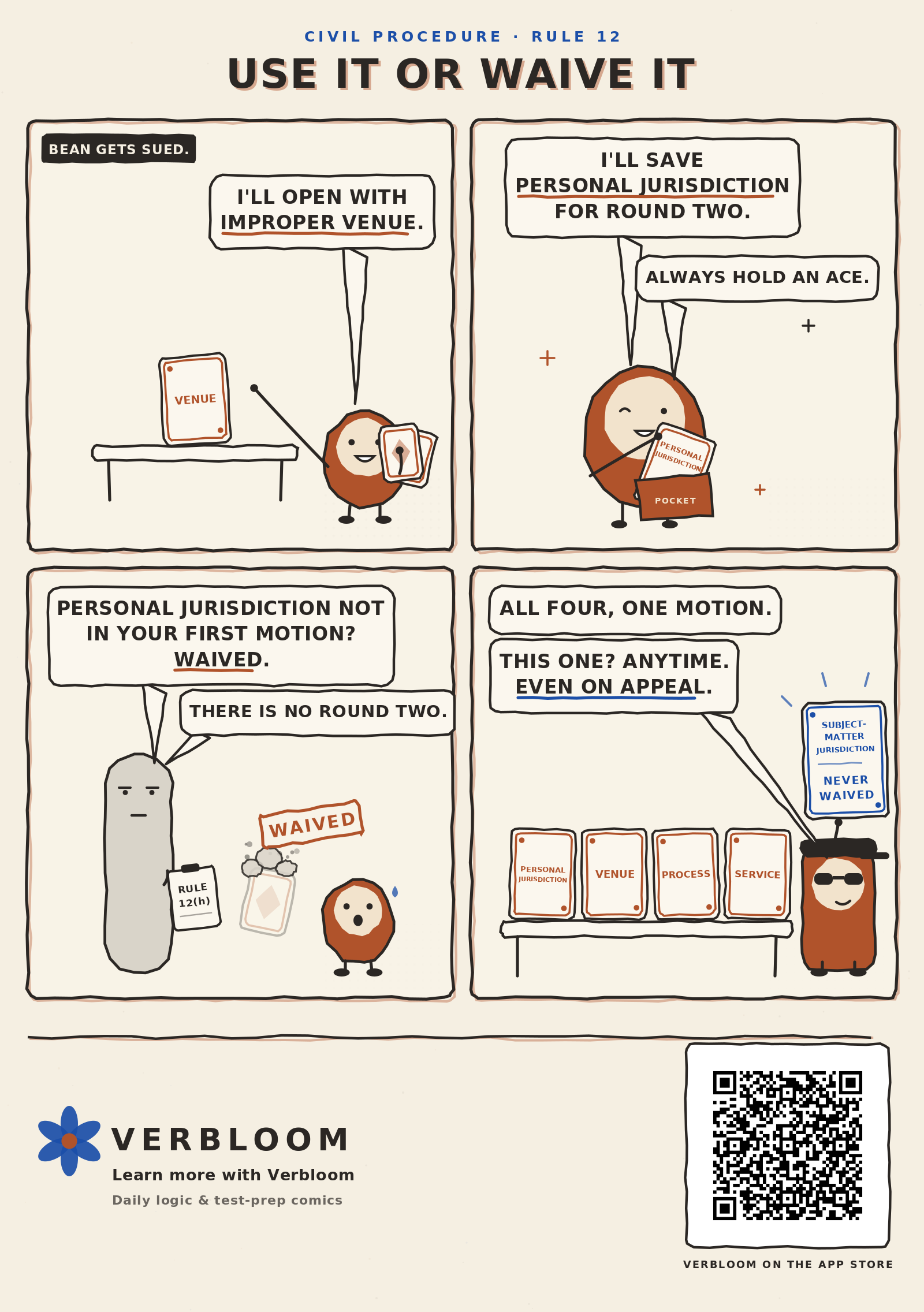
Run that test on the comic's two deals and the intuitive ranking inverts. A promise to mow weekly for two years cannot be fully performed in a year — the term itself forecloses it — so the agreement sits inside the Statute and is unenforceable without a signed writing. A promise to garden "for life" can be fully performed within a year, because the promisor might die next month, and on the majority view death completes a lifetime term rather than merely excusing it. So the lifetime handshake is enforceable and the two-year handshake is not. The same logic puts most indefinite-duration and at-will arrangements outside the Statute: a contract with no fixed end date is almost never within the one-year prong, because nothing in its terms rules out an early, complete performance. Be careful about the flip side, though — a term that could end early only through breach, or through a termination clause that discharges rather than completes the obligation, does not save a contract from the Statute in most jurisdictions. Courts distinguish full performance from excuse, and some of them apply that distinction strictly enough that lifetime-employment cases have gone the other way.
Two final points keep the rule honest. First, failing the Statute of Frauds makes a contract unenforceable, not void — the agreement exists, and the defense can be lost if it is not raised or if an exception applies. Part performance, judicial admission, promissory estoppel under Restatement § 139, and the UCC's merchant confirmatory memo and specially manufactured goods rules all rescue agreements that never had the required writing. Second, § 130(2) supplies its own escape hatch: once one party has completed performance, the one-year provision no longer bars enforcement of the other party's promises. The practical lesson is not "get everything in writing because long deals are dangerous." It is that the writing requirement turns on a narrow question of possibility, and the only way to answer it is to read the contract's terms and ask whether they leave any path to full performance inside a year.

Key takeaways
- Restatement (Second) of Contracts § 130(1): the one-year prong applies only where a promise cannot be fully performed within one year of the contract's making.
- The test is possibility at formation, not expected or actual duration — improbable early completion still takes a contract out of the Statute.
- A fixed two-year term is inside the Statute and needs a signed writing; a lifetime or indefinite term is generally outside it, because death or an open end date leaves a path to full performance within a year.
- Full performance is not the same as excuse. Ending early by breach, or by a clause that merely discharges the duty, usually does not pull a contract out of the Statute — and a minority of courts read lifetime terms this way too.
- Failing the Statute makes a contract unenforceable, not void: part performance, judicial admission, promissory estoppel (§ 139), the UCC merchant confirmatory memo, and § 130(2) full performance by one party can all save it.
Now try it for real
Battle the Mock Trial
The Statute of Frauds only sticks once you have had to raise it against someone. Play Mock Trial to argue contract defenses against a live opponent — free, no signup.
Frequently asked questions
Does a contract that takes more than a year to perform always need to be in writing?
No — and the phrasing of the question is where students go wrong. Restatement (Second) of Contracts § 130 asks whether a promise cannot be fully performed within one year from the making of the contract, judged by the contract's own terms at the moment of formation. A contract that is expected to take three years but could, consistent with its terms, be finished in six months falls outside the one-year prong entirely. Only agreements whose terms make completion within a year impossible are captured.
Why is an oral lifetime employment contract enforceable when an oral two-year contract is not?
Because a lifetime term can be fully performed within a year. The employee might die next month, and on the majority view that death completes the promised term rather than excusing performance of it — so nothing in the contract forecloses completion inside twelve months and the one-year prong never attaches. A fixed two-year term forecloses it absolutely: no sequence of events consistent with the agreement produces two years of performance in one. Some courts take a stricter view of lifetime contracts, so check your jurisdiction, but the Restatement rule and the majority position put lifetime deals outside the Statute.
What contracts fall under the Statute of Frauds?
The traditional categories are remembered as MY LEGS: contracts made in consideration of Marriage; contracts that cannot be performed within one Year; contracts for the sale of an interest in Land; promises by an Executor or administrator to answer personally for a decedent's debt; contracts for the sale of Goods priced at $500 or more under UCC § 2-201; and Suretyship promises to answer for the debt of another. Everything outside those categories can generally be formed orally and enforced.
What happens if a contract within the Statute of Frauds was never put in writing?
It is unenforceable, not void. The agreement exists and the Statute operates as an affirmative defense, which means a party who fails to raise it can lose it. Several doctrines also rescue an unwritten agreement: part performance, a judicial admission that the contract was made, promissory estoppel under Restatement § 139, and under the UCC the merchant confirmatory memo rule and the specially manufactured goods exception. Restatement § 130(2) adds that once one party has fully performed, the one-year provision no longer bars enforcement of the other party's promises.
Get a comic like this daily
Verbloom on iPhone
One concept, drawn, every morning — plus full practice sets for the LSAT, GRE, and 1L doctrinal courses.
Download free →Send it to your section
Free to share and print
Print it, post it to your study group, put it in the course Discord. No signup, no watermark removal, no catch — just credit Verbloom.
Download print-quality PNG